

Step-ups are a practical home exercise for seniors who want to strengthen their legs and make everyday activities, such as climbing stairs and getting up from a chair, feel easier. They require very little equipment and can be adapted to different fitness levels by changing the step height and using support when needed.
In this guide, we explain the benefits of step-ups for older adults, demonstrate how to perform the movement with controlled form, and cover beginner modifications, common mistakes, and ways to progress as strength improves. We also discuss alternatives for people who find step-ups uncomfortable or challenging.
Table of Contents
Safety comes first: Begin with a low, stable, non-slip step and keep a sturdy handhold within reach. Step-ups challenge both leg strength and balance, so they may not be appropriate for everyone. If you have significant balance difficulties, persistent knee pain, or concerns about starting a new exercise, seek advice from a qualified healthcare professional before proceeding.
- Builds Functional Strength: Step ups target key lower-body muscles essential for everyday movements like walking and climbing stairs.
- Improves Balance and Stability: The single-leg nature of the exercise enhances stability and can significantly reduce the risk of falls.
- Low-Impact and Joint-Friendly: When performed correctly, step ups are a gentle way to build strength without putting excessive strain on your knees and hips.
- Highly Adaptable: The exercise can be easily modified by changing the step height or adding support, making it suitable for nearly any fitness level.
- Enhances Independence: By improving strength and balance, step ups help seniors perform daily activities more easily and safely.
- Supports Bone Health: As a weight-bearing exercise, step ups help to maintain and improve bone density.
- Accessible at Home: No special gym equipment is needed; a sturdy stool or the bottom step of your staircase is all you need to get started.
What Are Step Ups and Why Are They Great for Seniors?
A step up is a compound exercise that involves placing one foot on an elevated platform and pushing through that leg to lift the rest of your body up, then stepping back down in a controlled manner. This seemingly simple action is a powerhouse of functional fitness, closely mimicking movements we perform every day, like climbing stairs or stepping over a curb. Its low-impact nature makes it an excellent choice for seniors, as it builds strength and endurance without jarring the joints.
The primary muscles engaged during a step up exercise include the large muscles of the lower body. Your quadriceps (front of the thighs) and glutes (buttocks) do the heavy lifting to extend your knee and hip, powering you upward. The hamstrings (back of the thighs) assist in this upward motion and play a crucial role in controlling your descent. Additionally, your calves and core muscles fire up to provide balance and stability throughout the entire movement, making it a comprehensive workout for improving coordination and strength.

- Adjustable aerobic stepper with stackable 4-inch and 6-inch risers for customizable workout…
- Non-slip textured surface and non-skid feet provide stable platform supporting up to 400 pounds
- This product contains 100% Global Recycled Standard (GRS) certified recycled post-consumer…
- Compact 26.8″ x 11″ size perfect for home workouts with convenient riser storage under platform
What makes step ups particularly great for seniors is their blend of accessibility and effectiveness. Unlike some complex gym workouts, the home step up exercise can be performed anywhere with minimal equipment. It’s a unilateral exercise, meaning it works one leg at a time, which is fantastic for identifying and correcting strength imbalances between your left and right sides. This focus on single-leg strength and balance training is vital for fall prevention and building the confidence needed to navigate the world safely and independently.
Find a reputable instructor who has been recently certified in ‘Seniors’ Fitness’ to purchase video links or Zoom links from so you know that when you follow their cues, you are receiving expert instruction to avoid injury AND get the most benefit from your workouts!
Key Benefits of Step Up Exercises for Seniors
Incorporating step ups into a regular routine offers a remarkable range of benefits that directly contribute to a higher quality of life for seniors. From building foundational strength to enhancing cognitive focus, this exercise is a multi-faceted tool for healthy aging.
Enhances Lower Body Strength: Strong legs are the foundation of mobility. Step ups directly target the quadriceps, hamstrings, and glutes, the muscles responsible for walking, standing up from a seated position, and climbing stairs. Building strength in these areas makes all of these daily activities feel easier and less strenuous.
Improves Balance and Stability: Each repetition of a step up is a mini balance challenge. By requiring you to stabilize your body on one leg, the exercise trains the small stabilizing muscles in your hips, legs, and core. This improved proprioception and stability is one of the most effective ways to reduce the risk of falls, a major concern for older adults.
Boosts Mobility and Flexibility: The movement of a step up encourages a healthy range of motion in the hip and knee joints. Performed consistently, it can help combat the stiffness that often comes with age, making movements like bending down or walking on uneven surfaces more comfortable and fluid.
Supports Bone Density: Step ups are a form of weight-bearing exercise, which is crucial for maintaining bone health. The force of your muscles working against gravity during the exercise stimulates bone-building cells, helping to slow the progression of age-related bone loss and reduce the risk of fractures.
Cardiovascular Health: When performed at a steady pace for multiple repetitions, step ups can elevate your heart rate, providing a light cardiovascular workout. This helps improve circulation, strengthens the heart, and can even boost your mood through the release of endorphins.
Increases Functional Independence: Ultimately, all these benefits combine to support one primary goal: maintaining independence. The strength, balance, and confidence gained from a consistent step up routine directly translate into a greater ability to live actively and safely in your own home and community.
How to Perform a Step Up Exercise Safely at Home
Getting started with the home step up exercise is simple, but prioritizing safety and proper form is essential to reap the benefits without risking injury. A few preparatory steps will ensure you have a secure and effective workout.
Preparation and Equipment: First, choose your step. The ideal surface is stable, non-slip, and at a comfortable height. The bottom step of a staircase is often perfect, as it’s secure and usually has a wall or banister nearby for support. A sturdy, low workout step or a robust stool can also work. Avoid anything wobbly or slippery. Wear supportive shoes with good grip, and make sure the area around your step is clear of clutter. Before you begin, perform a brief warm-up, such as marching in place or gentle leg swings, to prepare your muscles.
Getting Started: Follow these steps for a perfect, controlled movement:
- Step 1: Stand facing your step, with your feet about hip-width apart. Position yourself close enough that you can place your entire foot on the surface.
- Step 2: Place your right foot completely onto the step. Ensure your whole foot, especially your heel, is firmly planted.
- Step 3: Engage your core muscles and press through your right heel to lift your body straight up. The power should come from your front leg, not from pushing off your back foot.
- Step 4: Bring your left foot up to meet your right foot on the step. Stand tall for a moment.
- Step 5: Carefully step back down with your left foot first, landing softly. Follow with your right foot to return to the starting position.
- Step 6: You can either complete all your repetitions leading with the right leg before switching to the left, or you can alternate which leg you lead with for each rep.
Form and Safety Tips: To get the most out of the exercise and prevent injury, keep these tips in mind. Maintain an upright posture with your chest up and shoulders back, avoiding the temptation to lean too far forward. Keep your core engaged to help stabilize your torso. As you step up, make sure your knee tracks in line with your foot and doesn’t collapse inward. Most importantly, start with a very low step height to master the form. Only increase the height when you feel strong and stable. Always listen to your body; if you feel any sharp pain, stop immediately.
Progressing Your Step Up Routine: Variations and Challenges
One of the greatest advantages of the step up is its adaptability. As you grow stronger and more confident, you can easily modify the exercise to continue challenging yourself. Conversely, if you are just starting out, there are simple ways to make the movement more manageable.
Beginner Modifications: If a standard step up feels too difficult, start with these modifications. Use a very low surface, like a thick, sturdy book or an aerobic step with no risers. Performing the exercise next to a wall or holding onto a banister or the back of a sturdy chair for support is highly recommended. This allows you to focus on the leg movement without worrying about balance. You can also start with fewer repetitions and sets, gradually increasing them as you build strength.
Intermediate Progressions: Once you can comfortably perform several repetitions with good form, it’s time to add a challenge. The simplest way to progress is by gradually increasing the height of your step. You can also increase the volume by adding more repetitions or another set to your routine. For added resistance, hold light dumbbells or even household items like water bottles in each hand. Another great progression is the “hover” step up, where your trailing foot doesn’t touch the step at the top, forcing your lead leg to work harder on stability.
Advanced Variations (for fitter seniors): For those with a solid fitness base, several variations can target muscles in new ways.
- Lateral Step Ups: Stand sideways to the step and step up, pushing off the leg closest to the platform. This variation places more emphasis on the hip abductor and adductor muscles.
- Step Ups with Knee Drive: At the top of the movement, instead of placing your trailing foot on the step, drive that knee up toward your chest. This adds a significant balance and core challenge.
- Negative Step Ups: Focus only on the lowering phase. Stand on the step and slowly, with control, lower one foot to the ground over three to five seconds. This builds eccentric strength, which is crucial for stability.
To see continuous improvement, consistency is key. Aim to incorporate your step up routine into your schedule 2-3 times per week, ensuring you have at least one day of rest in between to allow your muscles to recover and rebuild.

- The Circuit Fitness Adjustable Aerobic Step Platform is built to handle intense exercise sessions…
- The top of the platform features a high-quality rubber non-slip surface, providing excellent…
- Equipped with non-skid rubber feet, this aerobic step platform stays securely in place during your…
- Despite its robust construction, the platform is lightweight, making it easy to adjust the height…

- Adjustable Step Trainer: Includes raisers to customize platform height to 4, 6, or 8 inches; fitting…
- Sturdy, Non-Slip Design: Features a textured top surface and rubber feet that keep the 31 x 11.5 x…
- Durable Construction: Built from shockproof, high-quality ABS plastic for long-lasting use; supports…
- Lightweight and Portable: Weighing just 0.2 lbs., this step platform is easy to carry, assemble, and…

- Total-Body Fitness: This circuit-size stair stepper for home workouts is a great home-fitness tool…
- Circuit Size Platform: This aerobic step platform features a wide 22″ L x 11″ W stepping surface…
- Step Higher, Burn More: With stackable 14.5″ L x 9.5″ W x 2″ H risers, this versatile step up box…
- Quality Construction: This durable workout step platform set is crafted from high-density…

- 3-IN-1 HEIGHT OPTIONS – Rotate the box to train at 16, 14, 12 inch heights for box jumps, step-ups…
- STABLE INTERLOCKING CONSTRUCTION – Interlocking panels and countersunk screws create a secure…
- NON-SLIP TRAINING SURFACE – Textured surface adds traction for more confident foot placement during…
- SMOOTH-FINISHED EDGES – Rounded, smooth-finished edges and recessed hardware help reduce snag points…
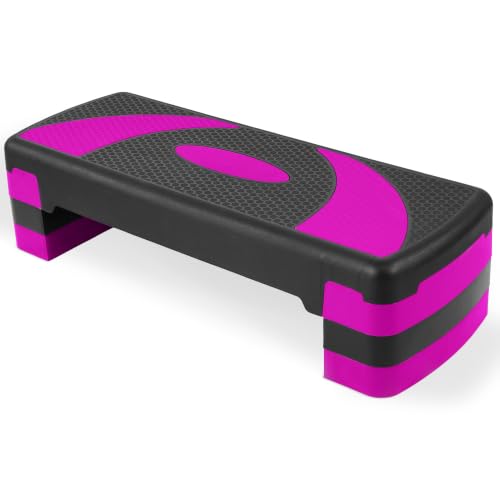
- Adjustable Step Trainer: Includes raisers to customize platform height to 4, 6, or 8 inches; fitting…
- Sturdy, Non-Slip Design: Features a textured top surface and rubber feet that keep the 31 x 11.5 x…
- Durable Construction: Built from shockproof, high-quality ABS plastic for long-lasting use; supports…
- Lightweight and Portable: Weighing just 0.2 lbs., this step platform is easy to carry, assemble, and…
Common Questions About Step Ups for Seniors
When starting a new exercise like step ups, it’s natural to have questions about frequency, safety, and alternatives. Addressing these common concerns can help you build a routine that is both effective and appropriate for your individual needs.
A frequent question is about the right number of repetitions and sets. A good starting point for most seniors is to aim for 8-12 repetitions on each leg. Complete 2 to 3 sets of this, with a short rest in between. However, this is just a guideline. The most important rule is to listen to your body. If you can complete the sets easily with perfect form, you might be ready to progress. If you’re struggling to finish, reduce the number of reps and focus on quality over quantity.
Concerns about knee or joint pain are also common. If you have pre-existing joint issues, it is crucial to consult with a doctor or physical therapist before you begin. They can provide personalized advice. For many, using a very low step or performing only a partial range of motion can make the exercise comfortable. The movement should feel challenging for your muscles but should not cause sharp pain in your joints. If you experience pain, stop the exercise.
If you find that step ups aren’t right for you, or if you want to add variety, several excellent alternatives offer similar benefits. Chair stands (or chair squats) are a fantastic option for building leg strength by repeatedly sitting and standing from a sturdy chair. Wall squats, where you slide your back down a wall into a seated position, also build quadriceps and glute strength with good support. For balance, simply practicing standing on one leg near a counter for support can be very effective.
Conclusion
The step up exercise is far more than just a simple movement; it’s a powerful tool for enhancing the health and independence of seniors. By strengthening the major muscles of the lower body, improving balance and coordination, and supporting bone health, it directly addresses many of the physical challenges associated with aging. Its low-impact nature and incredible adaptability make it a safe and accessible choice that can be performed in the comfort of your own home with minimal equipment. From beginner modifications using a wall for support to advanced variations like the knee drive, the step up can evolve with you on your fitness journey.
Embracing a consistent routine of step ups, perhaps 2-3 times per week, is a direct investment in your functional fitness—the strength and stability needed to navigate daily life with confidence. Whether it’s carrying groceries, playing with grandchildren, or simply walking up a flight of stairs without a second thought, the benefits of this exercise extend far beyond the workout itself. Remember to start slowly, prioritize proper form, and listen to your body. By integrating this fundamental exercise into your life, you are taking a proactive and empowering step toward maintaining your mobility, safety, and independence for many years to come.
Frequently Asked Questions
How many step ups should a senior do?
A good starting point is 2-3 sets of 8-12 repetitions per leg. You should adjust this based on your personal fitness level, focusing on maintaining good form throughout the set. It’s better to do fewer reps correctly than many reps with poor form.
What is a good step height for seniors?
Begin with a very low step, around 4-6 inches high. The bottom step of a staircase is often ideal. As you get stronger and more stable, you can gradually increase the height, but it should never be so high that it causes strain or forces you to compromise your form.
Are step ups bad for your knees?
When performed correctly with a proper step height, step ups are a low-impact exercise that can actually strengthen the muscles supporting the knee joint. However, if you have pre-existing knee pain, consult a doctor first. Always ensure your knee tracks over your foot and avoid letting it collapse inward.
Can I do step ups every day?
It is best to perform strength-building exercises like step ups 2-3 times per week, with rest days in between. This allows your muscles time to recover and grow stronger. On your off days, you can focus on other activities like walking or stretching.
What if I don’t have a step?
If you don’t have a suitable step or staircase, you can use a sturdy, non-slip stool or even a thick, solid book to start. Ensure whatever you use is completely stable and will not slide. If no equipment is available, exercises like chair squats, lunges (with support), and single-leg stands are great alternatives.
How do I know if I’m doing the exercise correctly?
You should feel the effort primarily in the glutes and thigh of your lead leg. Your movement should be smooth and controlled, both on the way up and down. Avoid pushing off your back foot or leaning heavily forward. If possible, perform the exercise in front of a mirror to check your posture.
What are the best alternatives to step ups for seniors?
Excellent alternatives that build similar muscles include chair stands (sitting and rising from a chair without using your hands), wall sits (holding a squat position with your back against a wall), and glute bridges (lying on your back and lifting your hips). These are all great for building lower body strength.
Related SallySunshine Articles:


Sally MacDonald is the founder of Sally Sunshine Gentle Fitness and is an ‘Older Adult Fitness Specialist’ with over 15 years of experience. Registered Health & Exercise Practitioner, ASFA Certified Advanced Seniors Fitness Instructor, Urban Poling Nordic Walking Certified Instructor, sharing practical guidance on strength, balance, mobility, chair exercises, and healthy aging to help older adults stay active, independent, and confident at every stage of life.