

Strong knees help us walk comfortably, get up from a chair, climb stairs and stay active as we age. When the muscles around the knees become weaker, everyday movements can feel more difficult. Gentle, targeted exercises can help build leg strength and support mobility without requiring a gym or expensive equipment.
In this guide, we cover practical knee strengthening exercises for seniors that can be performed at home using a sturdy chair, a wall or a countertop for support. You’ll find seated movements for beginners, supported standing exercises for those ready for more of a challenge, and gentle stretches to complement your routine.
Our advice is to start comfortably, move slowly and build up gradually. You do not need to perform every exercise at once. Choose movements suited to your current ability, and speak with a healthcare professional before starting if you have persistent knee pain, a recent injury or a condition that affects your mobility.
Table of Contents
- Why Knee Strength is Crucial: Strong muscles around the knee joint reduce strain, alleviate pain from conditions like arthritis, and lower the risk of falls.
- Safety First: Always consult a healthcare professional before starting a new exercise program. Proper form, slow progression, and listening to your body are key to preventing injury.
- At-Home Convenience: This article focuses on low-impact, effective exercises that require minimal to no equipment, making it easy to get started.
- Sitting and Standing Exercises: A variety of exercises are provided to target key muscle groups from both seated and standing positions, catering to different fitness levels.
- Flexibility is Key: Strength and flexibility go hand-in-hand. Gentle stretches are included to improve range of motion and reduce stiffness.
- Consistency Over Intensity: Building a regular, moderate routine is more beneficial for long-term knee health than occasional, intense workouts.
Ready to build strength and stay active as you age?
Sally Sunshine Gentle Fitness offers welcoming, low-impact fitness classes designed especially for seniors, with options for both in-person and online participation. Explore our online fitness classes for seniors and take the next step toward a stronger, more confident you.
Why Strong Knees Matter for Seniors: Benefits and Common Concerns
Think of the muscles surrounding your knees as a natural brace. The quadriceps (front of the thigh), hamstrings (back of the thigh), and calf muscles all work together to support the knee joint, absorbing shock and ensuring smooth movement. As we get older, muscle mass can naturally decline, a condition known as sarcopenia. This can leave the knee joint more vulnerable to stress and injury, exacerbating common age-related concerns.
Dedicating time to knee strengthening offers a wealth of benefits that directly enhance a senior’s quality of life. Improved mobility and flexibility make everyday movements, from getting out of a chair to gardening, feel easier and less strenuous. A significant advantage is the reduced risk of falls; strong leg muscles provide better balance and stability, which is crucial for fall prevention. For many seniors living with the discomfort of arthritis or general joint stiffness, building up these supporting muscles can significantly alleviate knee pain by reducing the load on the joint itself.
Concerns like osteoarthritis, where the cartilage in the knee wears down, are common in aging knees. While exercise cannot reverse arthritis, it can improve function and reduce pain by strengthening the muscles that control the joint. By improving knee strength, you are not just exercising; you are investing in your ability to perform daily activities independently and confidently for years to come.
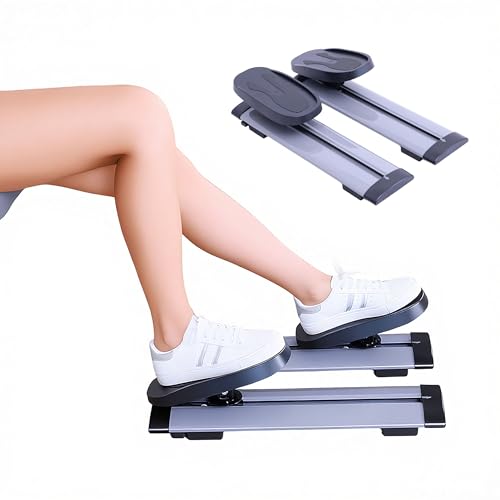
- For Knee Recovery and More: Ideal knee therapy device for surgeries (ACL, PCL), hip replacement or…
- Low-Impact Exercise Sliders: Ideal knee recovery equipment for seniors and anyone recovering from…
- Leg Exerciser: Perform leg extension, flexion exercises while sitting to increase strength and range…
- Extended 14.1″ Rail : Features Extended 14.1″ Rail to accommodate different recovery stages—ideal…
Safe Knee Strengthening: Principles for Effective and Pain-Free Workouts
Before beginning any new fitness regimen, it is essential to consult with your doctor or a physical therapist. They can help you determine if these exercises are appropriate for your specific health condition and offer personalized advice. Once you have the green light, adhering to a few key safety principles will ensure your workouts are both effective and pain-free.
The most important rule is to listen to your body. While mild muscle fatigue is normal, you should never feel sharp, stabbing, or sudden pain. If you do, stop the exercise immediately. It’s also crucial to start slowly. Begin with a small number of repetitions and gradually increase as you feel your strength improve. The quality of your movement is far more important than the quantity; focusing on proper form ensures you are targeting the right muscles and not putting undue strain on your joints.
Every exercise session should begin with a 5-10 minute warm-up, such as marching in place or gentle walking, to increase blood flow to your muscles. After your workout, a cool-down involving gentle stretches helps improve flexibility and prevent stiffness. Remember that consistency over intensity is the goal. Regular, moderate activity a few times a week will yield better long-term results than sporadic, intense sessions. Finally, create a safe environment by wearing comfortable, supportive footwear and ensuring you have a clear space with a sturdy chair nearby for support.
Top Knee Strengthening Exercises for Seniors You Can Do at Home
You don’t need a gym membership or fancy equipment to build stronger knees. These effective, low-impact exercises are designed to be performed safely at home, using your own body weight and a sturdy chair. For each exercise, focus on slow, controlled movements and breathe steadily—exhale during the exertion phase and inhale as you return to the starting position. Aim for 8-12 repetitions for each exercise, completing 1-2 sets as you feel comfortable.
Sitting Exercises to Strengthen Knee Muscles
Seated exercises are a fantastic starting point as they provide support and reduce the load on your joints, making them ideal for those with balance concerns or significant knee pain.
- Chair Knee Extensions: This exercise directly targets the quadriceps, the large muscles at the front of your thigh that are primary stabilizers for the knee.
- Instructions: Sit up straight in a sturdy chair with your feet flat on the floor. Keeping your back against the chair, slowly extend one leg straight out in front of you without locking the knee. Hold the position for 3-5 seconds, feeling the muscle at the front of your thigh engage. Slowly lower your foot back to the floor. Repeat with the other leg.
- Seated Hamstring Curls: Strengthening the hamstrings, the muscles on the back of your thigh, creates balanced strength around the knee.
- Instructions: Sit towards the front of your chair with your feet on the floor. Extend one leg out slightly with your heel on the floor. Slowly slide your heel back towards the chair as far as you can, as if trying to drag something heavy. You should feel the back of your thigh working. Hold for a moment, then slide your foot back out. Repeat with the other leg.
- Calf Raises (Seated): Strong calf muscles help with ankle stability and support the knee from below.
- Instructions: Sit tall with both feet flat on the floor, hip-width apart. Slowly press down through the balls of your feet to lift your heels as high as you comfortably can. Hold at the top for a moment, then slowly lower your heels back down.
- Inner Thigh Squeezes: These muscles, also known as adductors, help with stability and proper knee alignment.
- Instructions: Sit in a chair with your feet flat on the floor. Place a small pillow, a rolled-up towel, or a soft ball between your knees. Gently squeeze the object with your knees, holding the contraction for 3-5 seconds. Release the pressure slowly.
Standing and Stability Exercises for Stronger Knees
Once you feel comfortable with seated exercises, you can progress to standing movements. Always use a sturdy chair, wall, or countertop for balance and support.
- Wall Slides (Mini Squats): This is a safe way to build quadriceps and glute strength without putting too much pressure on the knees.
- Instructions: Stand with your back flat against a wall and your feet about shoulder-width apart, a foot or so away from the wall. Slowly slide your back down the wall until your knees are slightly bent in a shallow squat (no more than a 45-degree angle). Hold for 5 seconds, making sure your knees stay aligned over your ankles. Slowly slide back up to the starting position.
- Standing Leg Lifts (Forward, Side, Back): These exercises strengthen the muscles around your hips and thighs, which are crucial for balance and knee stability.
- Instructions: Stand tall while holding onto a sturdy support. For forward lifts, slowly raise one leg straight out in front of you, keeping it straight. Lower it with control. For side lifts, slowly raise one leg out to the side. For back lifts, slowly extend one leg straight behind you. Keep your back straight and core engaged for all movements. Complete all reps for one direction before switching legs.
- Heel-to-Toe Walks: This exercise challenges your balance and proprioception (your body’s awareness of its position in space), which helps prevent falls.
- Instructions: Stand near a wall or countertop for support. Take a step forward by placing the heel of one foot directly in front of the toes of the other foot, as if walking on a tightrope. Continue for 5-10 steps, focusing on your balance and keeping your gaze forward.
- Chair Squats (Assisted): This is a highly functional exercise that mimics the motion of sitting and standing, strengthening your entire lower body.
- Instructions: Stand in front of a sturdy chair with your feet shoulder-width apart. Keeping your chest up and back straight, slowly bend your knees and hips to lower yourself towards the chair as if you are about to sit down. Go as low as you comfortably can, then push through your heels to return to a standing position. You can lightly touch the chair for guidance or use your hands on the armrests for assistance if needed.
Integrating Stretches and Flexibility for Healthy Knees
Flexibility is just as important as strength for maintaining healthy knees. Tight muscles can pull on the knee joint, causing misalignment and pain. Integrating gentle stretches into your routine, especially after your strengthening exercises when your muscles are warm, can improve your range of motion and reduce stiffness. When stretching, move into the position slowly until you feel a gentle pull, not pain. Avoid bouncing, as this can cause injury. Hold each stretch for about 15-30 seconds to give the muscle time to relax and lengthen.
- Hamstring Stretch (Seated): Sit on the edge of a sturdy chair. Extend one leg straight out in front of you with your heel on the floor and your toes pointing up. Keeping your back straight, slowly lean forward from your hips until you feel a gentle stretch along the back of your extended leg.
- Quadriceps Stretch (Standing with Support): Stand next to a wall or sturdy chair for balance. Hold onto the support with one hand. Bend your opposite knee and bring your heel up toward your buttock. Grasp your ankle with your free hand. Stand up straight and gently pull your heel closer to your body until you feel a stretch in the front of your thigh. Keep your knees close together.
- Calf Stretch (Wall Push): Face a wall and place your hands on it at shoulder height. Step one foot back, keeping that leg straight with your heel flat on the floor. Bend your front knee and lean gently into the wall until you feel a stretch in the calf of your back leg.
- Figure-Four Stretch (Seated): Sit tall in a chair. Cross one ankle over the opposite knee. Gently press down on the bent knee to feel a stretch in your hip and glute area. Keeping the hips and glutes flexible is important as tightness in this area can affect knee alignment.
Building a Consistent Knee Strengthening Routine for Lasting Health
The key to achieving lasting benefits for your knees is consistency. Aim to perform your knee strengthening workouts at least two to three times per week on non-consecutive days. This schedule gives your muscles adequate time to recover and rebuild between sessions. On your “off” days, you can focus on light activities like walking or stretching to maintain mobility without over-stressing your joints.
As the exercises become easier, you can gradually progress to make them more challenging. This doesn’t necessarily mean moving to high-impact activities. Instead, you can increase the number of repetitions or sets, hold the positions for a few seconds longer, or, if your doctor approves, add light resistance by using ankle weights or resistance bands. The most important part of progression is to do it slowly and listen to your body’s feedback.
Keeping a simple log of your workouts can be a great way to stay motivated. Tracking which exercises you did and how many repetitions you completed allows you to see your progress over time, which can be very encouraging. While mild muscle soreness is a normal part of getting stronger, it’s important to know when to seek professional help. If you experience persistent or worsening pain, swelling, or a feeling of instability in your knee, make an appointment with your doctor or a physical therapist. They can help diagnose the issue and ensure you are on the right path to healthier, stronger knees.
Conclusion: Taking the First Step Towards Healthier Knees
Take the First Step Towards Stronger Knees
Building stronger knees does not require complicated workouts or expensive equipment. A few gentle, well-controlled exercises can help you work on the muscles that support your knees while maintaining the strength and mobility needed for everyday activities.
Start with movements that feel comfortable, use a sturdy chair for support when needed, and progress gradually as your ability improves. Consistency matters more than pushing yourself too hard, and exercises should be adapted to your individual needs.
Looking for a gentle way to keep moving? Explore Sally Sunshine Gentle Fitness and discover online fitness classes designed for older adults who want to maintain strength, mobility and confidence at their own pace.
Ready to build strength and stay active as you age?
Sally Sunshine Gentle Fitness offers welcoming, low-impact fitness classes designed especially for seniors, with options for both in-person and online participation. Explore our online fitness classes for seniors and take the next step toward a stronger, more confident you.
Frequently Asked Questions (FAQ)
How often should a senior do knee strengthening exercises?
For best results, seniors should aim to perform knee strengthening exercises at least two to three times per week on non-consecutive days. This allows muscles time to recover and grow stronger between sessions. Gentle stretching can be done daily.
Is walking good for strengthening knees?
Walking is an excellent low-impact cardiovascular exercise that helps with overall leg strength and joint mobility. However, to specifically target and build the muscles that support the knee joint, it should be complemented with targeted strength exercises like chair squats and leg extensions.
What should I do if an exercise causes knee pain?
You should stop the exercise immediately. A key principle of safe exercise is to listen to your body. You may feel muscle fatigue, but you should not feel sharp, stabbing, or joint pain. Try a different exercise or a modification, and if the pain persists, consult a doctor or physical therapist.
How long will it take to feel a difference in my knee strength?
With consistent effort (2-3 times per week), most people begin to notice an improvement in strength, stability, and a reduction in discomfort within 4 to 8 weeks. Progress is gradual, so patience and consistency are crucial.
Can I do these exercises if I have arthritis in my knees?
In many cases, yes. Strengthening the muscles around the knee can help reduce the load on the arthritic joint and alleviate pain. However, it is essential to consult with your doctor or a physical therapist before starting to ensure the exercises are appropriate for your specific condition.
Do I need any special equipment for these knee exercises?
No, the exercises in this guide are designed to be done at home with minimal equipment. All you need is a sturdy chair for support and sitting exercises. A small pillow or rolled-up towel can be used for the inner thigh squeeze exercise.
Should I warm up before doing knee exercises?
Yes, always warm up for 5-10 minutes before starting your exercises. A good warm-up, such as marching in place or gentle walking, increases blood flow to the muscles and prepares them for activity, which helps prevent injury.
Related SallySunshine Articles:


