

Resistance bands are one of the most effective pieces of exercise equipment older adults can own. They’re affordable, easy to use, take up almost no storage space, and provide an excellent way to improve strength, flexibility, balance, and mobility without the need for heavy weights or expensive gym equipment. Whether you’re just beginning an exercise program or looking for a new way to stay active, resistance bands offer a safe and practical solution that can grow with you as your fitness improves.
Table of Contents
At Sally Sunshine, resistance bands are one of our favorite tools for senior fitness classes because they’re incredibly adaptable. They work equally well for seated chair exercises, standing strength workouts, balance training, and rehabilitation programs. We regularly see participants who were initially hesitant about strength training gain confidence after discovering how gentle and effective resistance bands can be. As muscles become stronger, it’s easy to increase the challenge simply by selecting a stronger band or changing the way an exercise is performed.
Strength training becomes increasingly important as we age. Beginning around our fifties, we naturally lose muscle mass each year unless we actively work to maintain it. This gradual decline, known as sarcopenia, affects far more than muscle size. It influences balance, posture, walking speed, bone health, and the ability to perform everyday activities such as climbing stairs, carrying groceries, or getting out of a chair. The good news is that regular resistance training can slow—and in many cases partially reverse—this loss of strength.
Many older adults avoid traditional weight training because they worry about hurting themselves or aggravating painful joints. That’s completely understandable. Heavy dumbbells and weight machines aren’t always the best choice for everyone, particularly those living with arthritis, osteoporosis, shoulder problems, or recovering from joint replacement surgery. Resistance bands offer a gentler alternative by providing smooth, controlled resistance throughout each movement. Instead of relying solely on gravity, the resistance increases gradually as the band stretches, making many exercises feel more comfortable while still challenging the muscles.
Another reason resistance bands are so popular is their versatility. A single set can be used to strengthen nearly every major muscle group in the body. Arms, shoulders, chest, back, hips, legs, core, and even the small stabilizing muscles that help with balance can all be trained using one inexpensive piece of equipment. Because the bands are lightweight and portable, they’re equally useful at home, while travelling, or in a group exercise class.
Choosing the right resistance bands, however, isn’t always straightforward. Walk into any sporting goods store or browse online and you’ll find dozens of options. Flat therapy bands, tube bands with handles, loop bands, fabric bands, figure-eight bands, and heavy power bands all have their place, but they aren’t designed for the same purpose. Some are excellent for rehabilitation, while others are intended for athletes lifting significant resistance. Selecting the wrong style can make exercising more difficult than it needs to be.
This guide will help you understand the differences between the various types of resistance bands and explain which ones are best suited for older adults. We’ll discuss how to choose the proper resistance level, review our favorite resistance bands for seniors, compare their strengths and weaknesses, and provide practical advice for using them safely. Whether your goal is improving balance, maintaining independence, building strength, or simply staying active, you’ll have the information you need to choose the right resistance bands with confidence.
Quick Answer
If you’re looking for the best all-around resistance bands for seniors, a quality set of tube resistance bands with comfortable foam handles is usually the best choice. They provide enough versatility to perform dozens of upper- and lower-body exercises, the handles make them easier to grip than flat bands, and most sets include multiple resistance levels so you can gradually increase the challenge as your strength improves.
For seniors recovering from surgery, managing arthritis, or beginning an exercise program after a long period of inactivity, flat therapy bands are often the better option. They provide lighter resistance, move smoothly through each exercise, and are commonly used by physiotherapists during rehabilitation programs.
Fabric loop bands have also become increasingly popular because they stay in place during lower-body exercises without rolling or pinching the skin. They’re particularly effective for strengthening the hips and glutes, improving balance, and supporting healthy knees.
Rather than purchasing the strongest bands available, look for a complete set that includes several resistance levels. Different muscle groups require different amounts of resistance, and having multiple options allows you to exercise safely while continuing to progress over time.
How We Selected Our Recommendations
We evaluated each resistance band based on ease of use, comfort, durability, resistance options, value, and suitability for older adults. Our recommendations prioritize products that support safe, effective exercise for beginners and experienced seniors alike.
Our Top Picks
| Product | Best For | Band Type | Resistance Levels | Handles | Latex-Free Option | Our Rating |
|---|---|---|---|---|---|---|
| THERABAND Professional Resistance Bands | Beginners, rehabilitation, chair exercises | Flat therapy band | Multiple colour-coded levels | No | Yes (latex-free versions available) | ⭐⭐⭐⭐⭐ |
| Bodylastics Warrior Resistance Band Set | Full-body strength training | Tube bands | Stackable resistance (up to 100+ lbs depending on set) | ✓ | No | ⭐⭐⭐⭐⭐ |
| Fit Simplify Resistance Loop Bands | Balance, hips, glutes, knee stability | Mini loop bands | Five resistance levels | No | No | ⭐⭐⭐⭐☆ |
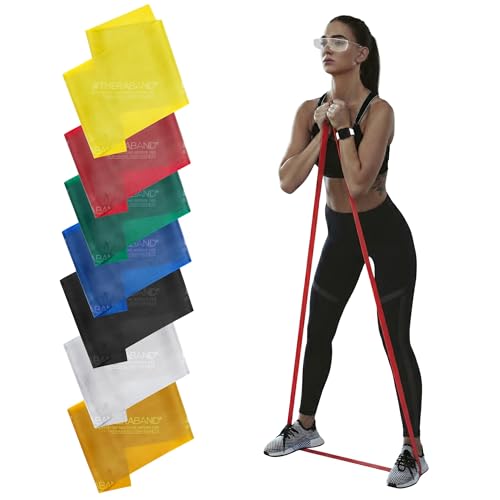
- VERSATILE RESISTANCE BANDS FOR FULL BODY TRAINING: Professional 7 pack resistance bands set designed…
- 7 PROGRESSIVE LEVELS, 6 FT LENGTH EACH: Includes seven 6 foot exercise bands with increasing…
- PROFESSIONAL LATEX FOR SMOOTH TENSION: Made from high-quality natural latex that delivers…
- PORTABLE WORKOUT BANDS FOR ANYWHERE TRAINING: Lightweight and compact design rolls up easily for gym…
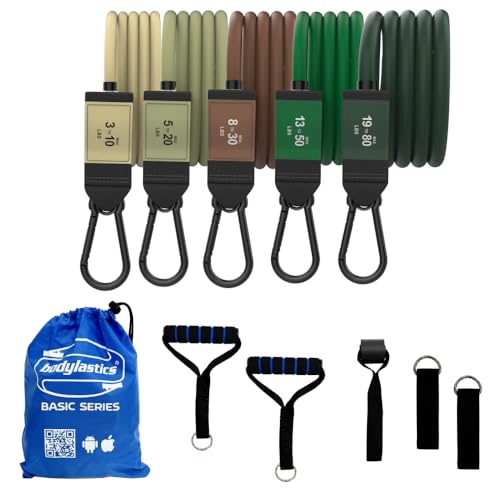
- ✅ BASIC SERIES – Get An Extra-Durable Exercise Band Set: Our BASIC exercise bands have a robust…
- ✅ BASIC SERIES – Durable Clips For Safe Attachment: Our resistance bands have premium patented…
- ✅ BASIC SERIES – Workout With Comfortable And Wide Handles: These extra wide durable handles…
- ✅ BASIC SERIES – Long-Lasting Tube Resistance Bands: This workout set includes 5 premium, workout…

- High End Exercise Bands. Our 12″³ By 2″³ Heavy Duty Loop Resistance Bands Come In 5 Varying…
- Great With Any Workout. This Resistance Band Set Can Be Integrated Seamlessly With Various Popular…
- Multiple Uses. While These Resistance Bands Are Often Used For Sports And Fitness, Physical…
- Superior Quality. All Of Our Exercise Resistance Bands Are Thoroughly Tested Before We Ship Them Out…
Best Overall: THERABAND Professional Resistance Bands
If I could recommend only one resistance band for most seniors, it would be the THERABAND Professional Resistance Band. For decades, THERABAND has been the brand of choice in physiotherapy clinics, rehabilitation centres, and senior wellness programs. That reputation wasn’t built through clever marketing—it comes from producing dependable, consistent products that perform exactly as expected.
Unlike tube-style bands with handles, THERABAND uses flat latex bands that can be adapted for dozens of different exercises. They’re equally effective for seated chair workouts, standing strength exercises, stretching routines, and rehabilitation programs. Because they’re available in clearly defined resistance levels, it’s easy to start with a lighter band and progress as your strength improves.
One feature we particularly appreciate is the predictable resistance. Many inexpensive bands vary significantly from one product to another, making it difficult to judge how much resistance you’re actually using. THERABAND’s colour-coded system has become an industry standard, giving users confidence that moving to the next colour represents a gradual and measurable increase in difficulty.
These bands are especially well suited to older adults recovering from surgery, managing arthritis, or returning to exercise after a long break. Their smooth resistance allows movements to feel controlled and comfortable, reducing the temptation to rush through exercises using momentum.
The only limitation is that flat bands don’t include handles, so some exercises require wrapping the band around your hands or using accessories. For most seniors, however, that’s a small trade-off for the quality and versatility they provide.
Best for:
- Beginners
- Chair exercise programs
- Arthritis
- Rehabilitation
- General strength and flexibility training
Best Complete Set: Bodylastics Warrior Resistance Band Set
If you’re looking for a complete home exercise system rather than a single resistance band, the Bodylastics Warrior Set is difficult to beat. It includes multiple resistance bands, comfortable handles, ankle straps, a door anchor, and other accessories that allow you to perform dozens of different exercises without purchasing additional equipment.
One of the biggest advantages of the Bodylastics system is its stackable resistance design. Instead of replacing one band with another as you become stronger, you can combine multiple bands to create exactly the amount of resistance you need. This makes the system suitable for everyone from beginners to more experienced exercisers.
The foam-covered handles deserve special mention because they’re comfortable to hold even during longer workouts. Many seniors experience reduced grip strength or arthritis in their hands, and poorly designed handles can quickly become uncomfortable. Bodylastics has done an excellent job creating handles that are secure without feeling bulky.
The included door anchor also expands the number of possible exercises considerably. Rows, chest presses, lat pulldowns, triceps extensions, and many other movements become possible without needing a dedicated exercise machine.
Although this system costs more than purchasing a single resistance band, it can replace a surprising amount of traditional gym equipment. For seniors who enjoy exercising regularly at home, it’s an investment that provides excellent long-term value.
Best for:
- Full-body home workouts
- Progressive strength training
- Seniors replacing dumbbells
- Couples sharing equipment
Best for Lower-Body Strength and Balance: Fit Simplify Resistance Loop Bands
Balance begins with strong hips and legs, which is why loop resistance bands have become such an important part of modern senior fitness programs. The Fit Simplify Resistance Loop Bands are among the best-known options available and are particularly effective for improving lower-body strength.
These compact loop bands fit around the thighs, knees, or ankles, allowing you to perform exercises that target the glutes, hip abductors, quadriceps, and other stabilizing muscles. Although these muscles don’t receive much attention, they play a major role in walking confidently, climbing stairs, and maintaining balance.
The five-band set includes several resistance levels, making it easy to begin with a lighter band before progressing. This gradual approach is especially important for older adults because it encourages proper technique instead of relying on excessive resistance.
We also like that these bands are compact enough to carry almost anywhere. They’re ideal for home workouts, travel, or adding extra resistance to walking and balance exercises.
While loop bands aren’t intended to replace a complete resistance training program, they make an excellent complement to tube bands or therapy bands and are particularly valuable for improving lower-body stability.
Best for:
- Hip strengthening
- Balance training
- Knee stability
- Walking exercises
- Fall prevention
I think the next section should not jump straight into exercises. The reader has just seen four recommendations and is probably wondering, “Which one is actually right for me?” That’s the perfect point to answer that question before moving into workouts.
How to Choose the Right Resistance Band
Choosing the right resistance band isn’t about buying the strongest band or the most expensive set. The best resistance band is the one that matches your current fitness level, supports your goals, and encourages you to exercise consistently. Starting with a band that’s too difficult often leads to poor technique and frustration, while one that’s too light may not provide enough challenge as your strength improves.
For most older adults, purchasing a complete set with multiple resistance levels is the smartest investment. Different muscles require different amounts of resistance, and your legs will naturally be stronger than your shoulders or arms. Having several bands available allows you to choose the right resistance for each exercise instead of trying to make one band work for everything.
Consider Your Current Fitness Level
If you’re new to exercise or returning after a long break, begin with lighter resistance than you think you need. It’s much easier to progress to a stronger band than it is to struggle with one that’s too difficult.
A lighter band allows you to learn proper technique while moving through a full range of motion. Good form is far more important than heavy resistance, especially during the first few weeks of a strength-training program.
As a general guideline:
- Beginner: Extra-light or light resistance
- Moderately active: Light to medium resistance
- Experienced exerciser: Medium to heavy resistance
Remember that these are only starting points. Most seniors use different resistance levels for different exercises.
Match the Band to Your Goals
Your exercise goals should influence the type of band you purchase.
If your primary goal is improving general strength at home, a tube resistance band with handles offers the greatest versatility. These bands allow you to perform pushing, pulling, pressing, rowing, and curling exercises that strengthen nearly every major muscle group.
If your focus is rehabilitation, improving flexibility, or participating in chair exercise classes, flat therapy bands are usually the better choice. Their smooth, gentle resistance makes them ideal for controlled movements and mobility exercises.
If you’re concerned about balance, fall prevention, or strengthening your hips and legs, loop bands are an excellent addition to your routine. Many physiotherapists recommend them for improving hip stability, which plays an important role in walking confidently and reducing the risk of falls.
Pay Attention to Grip Comfort
One feature that’s often overlooked is how comfortable the band is to hold.
Many older adults experience reduced grip strength or arthritis in their hands, making narrow handles uncomfortable during longer workouts. If this applies to you, look for tube bands with large foam-covered handles or choose flat therapy bands that can be wrapped comfortably around your hands.
Comfort may seem like a small detail, but equipment that’s pleasant to use is far more likely to become part of a regular exercise routine.
Durability Matters
Resistance bands are designed to stretch repeatedly, but not all bands are made to the same standard.
Higher-quality bands maintain their elasticity longer and provide more consistent resistance throughout each movement. Cheap bands may lose tension quickly, become sticky over time, or develop small cracks that eventually lead to breakage.
Although premium brands cost a little more initially, they often provide better value because they last significantly longer.
Latex or Latex-Free?
Most resistance bands are made from natural latex because it provides excellent elasticity and durability. If you have a latex allergy or sensitive skin, however, you’ll want to choose latex-free alternatives or fabric resistance bands.
Fabric loop bands have become increasingly popular because they don’t roll, pinch, or stick to the skin during lower-body exercises. While they aren’t suitable for every movement, many seniors find them noticeably more comfortable than traditional rubber loop bands.
Color Isn’t Always the Same
Many people assume that resistance band colours are standardized, but that’s not the case.
One manufacturer’s red band may provide the same resistance as another company’s green or blue band. Instead of relying on colour alone, always check the manufacturer’s resistance chart before purchasing additional bands or trying to match existing equipment.
Buying all your bands from the same manufacturer also helps ensure a consistent progression as your strength improves.
Signs It’s Time to Move to a Stronger Band
Progressive resistance is one of the keys to building strength. As your muscles adapt, exercises that once felt challenging will gradually become easier. That’s a positive sign—it means your body is responding to the training.
You may be ready to increase the resistance if:
- You can easily complete 15 to 20 repetitions with good form.
- The final few repetitions no longer feel challenging.
- You aren’t experiencing muscle fatigue by the end of a set.
- Your workouts have become noticeably easier over several weeks.
There’s no need to rush this process. Increasing resistance too quickly can lead to poor technique or unnecessary strain. Most seniors benefit more from slow, steady progress than from making large jumps in resistance.
As a general rule, you should finish each set feeling that you could perform one or two additional repetitions, but not ten. That level of effort provides enough challenge to build strength while allowing you to maintain proper form and exercise safely.
Why Resistance Bands Are Ideal for Older Adults
One of the biggest misconceptions about strength training is that it requires lifting heavy weights. While free weights certainly have their place, they aren’t the only way to build muscle or improve functional strength. Resistance bands provide many of the same benefits while being easier on the joints and far less intimidating for beginners.
Unlike dumbbells, which exert the same downward force throughout an exercise, resistance bands create progressive tension. The farther the band stretches, the greater the resistance becomes. This means the muscles are challenged most during the strongest part of the movement while placing less stress on joints when they’re in weaker positions. For many older adults, this creates a smoother, more comfortable exercise experience.
This gradual resistance is especially valuable for people living with arthritis or chronic joint pain. Sudden loading can sometimes irritate sensitive joints, whereas resistance bands allow the muscles to engage progressively. Many seniors find they can comfortably perform exercises with bands that would be uncomfortable using traditional weights.
Resistance bands also encourage slower, more controlled movements. Momentum is difficult to use when exercising with elastic resistance, so the muscles remain under tension for longer periods. This improves muscle activation while helping develop better balance, coordination, and body awareness. Those qualities become increasingly important as we age because they contribute directly to fall prevention and everyday mobility.
Perhaps the greatest advantage is accessibility. Resistance bands make strength training available to people with a wide range of fitness levels. Exercises can be performed standing, seated in a sturdy chair, or even lying down, making them suitable for seniors who have limited mobility or are returning to exercise after illness or surgery. As strength improves, progression is simple. A stronger band, additional repetitions, or slight adjustments in technique can provide a new challenge without dramatically changing the exercise itself.
Consistency is one of the most important factors in any exercise program, and resistance bands remove many of the obstacles that keep people from exercising regularly. They’re inexpensive, require virtually no storage space, and can be used almost anywhere. When equipment is easy to access and enjoyable to use, it’s much more likely to become part of a regular routine.
The Best Resistance Band Exercises for Seniors
One of the biggest advantages of resistance bands is their versatility. With a single band, you can perform dozens of exercises that strengthen the muscles used in everyday life. Whether your goal is getting out of a chair more easily, climbing stairs with confidence, or simply maintaining your independence, resistance band exercises can help you build functional strength safely.
Before you begin, take a few minutes to warm up by marching in place, rolling your shoulders, or walking around the room. Start each exercise using slow, controlled movements and focus on proper technique rather than speed. If you experience sharp pain, stop the exercise and consult your healthcare provider before continuing.
As a general guideline, aim for 8 to 12 repetitions of each exercise and complete one or two sets when you’re first starting. As your strength improves, gradually work toward two or three sets using a slightly stronger band if needed.
1. Seated Bicep Curl
The bicep curl strengthens the muscles used for lifting groceries, carrying laundry, and picking up everyday objects.
Sit upright in a sturdy chair with both feet flat on the floor. Place the middle of the resistance band under your feet and hold one handle or end of the band in each hand with your palms facing forward. Keeping your elbows close to your sides, slowly curl your hands toward your shoulders before lowering them with control.
Avoid swinging your arms or leaning backward to create momentum. The movement should remain smooth from beginning to end.
2. Seated Chest Press
Strong chest and shoulder muscles make pushing movements easier, whether you’re opening a heavy door or rising from a chair.
Wrap the resistance band around the back of a sturdy chair or across your upper back while holding each end securely. Begin with your hands near your chest and slowly press forward until your arms are almost straight. Pause briefly before returning to the starting position under control.
Keep your shoulders relaxed and avoid locking your elbows at the end of the movement.
3. Seated Row
The seated row strengthens the upper back, helping improve posture and counteracting the rounded shoulders that often develop with age.
Sit tall with your legs extended slightly and loop the band around the soles of your feet. Hold each end of the band with your arms extended in front of you. Pull your elbows backward while squeezing your shoulder blades together, then slowly return to the starting position.
Imagine trying to place your shoulder blades into your back pockets as you complete each repetition. This helps activate the correct muscles rather than relying on your arms alone.
4. Shoulder Press
Strong shoulders make everyday tasks such as reaching into cupboards or lifting light objects much easier.
Sit or stand with the band positioned under your feet. Hold the handles at shoulder height with your palms facing forward. Slowly press upward until your arms are almost straight overhead, then lower the band with control.
If reaching fully overhead causes discomfort, reduce the range of motion or consult a qualified fitness professional before performing this exercise.
5. Standing Leg Press
The muscles in your thighs and hips play a major role in walking, climbing stairs, and maintaining balance.
Secure one end of the band beneath your supporting foot while looping the other around the opposite foot. Slowly extend your leg forward against the resistance before returning to the starting position.
Perform all repetitions on one leg before switching sides.
6. Side Leg Raises
This simple exercise targets the muscles along the outside of the hips, which are essential for balance and fall prevention.
Place a loop band around your ankles or just above your knees. Stand behind a sturdy chair and lightly hold the backrest for support. Slowly lift one leg out to the side without leaning your upper body. Lower the leg with control and repeat before changing sides.
The movement doesn’t need to be large. Quality is far more important than height.
7. Seated Leg Extension
The quadriceps are among the largest muscles in the body and are heavily involved in standing up and climbing stairs.
Anchor the band behind the chair or under your supporting foot. Slowly straighten one knee until your leg is nearly parallel with the floor. Hold briefly before returning to the starting position.
Avoid snapping the knee straight. The motion should remain controlled throughout the exercise.
8. Standing Hip Abduction
Hip strength contributes directly to walking stability and improved balance.
Loop a resistance band around your ankles and stand beside a sturdy chair for support. Keeping your upper body upright, slowly move one leg outward while keeping the knee straight. Return to the starting position without allowing the band to pull your leg back quickly.
This exercise works small stabilizing muscles that are often neglected but play an important role in reducing the risk of falls.
9. Band Pull-Apart
This exercise strengthens the upper back and rear shoulders while improving posture.
Hold the resistance band in front of your chest with both hands slightly wider than shoulder-width apart. Keeping your arms nearly straight, slowly pull the band apart until your shoulder blades come together. Return to the starting position with control.
Avoid shrugging your shoulders toward your ears during the movement.
10. Seated Core Rotation
Maintaining core strength helps support the spine, improve posture, and enhance balance during daily activities.
Sit tall in a sturdy chair with the band anchored beside you. Hold the band with both hands and slowly rotate your upper body away from the anchor point while keeping your hips facing forward. Return slowly and repeat before switching sides.
The movement should come from your torso rather than your arms.
A Simple Weekly Resistance Band Routine
You don’t need to exercise every day to see results. In fact, allowing your muscles time to recover is an important part of getting stronger.
For most seniors, a schedule like this works well:
Monday: Full-body resistance band workout
Tuesday: Walking and gentle stretching
Wednesday: Resistance band workout with a focus on balance and lower-body strength
Thursday: Rest or light activity
Friday: Full-body resistance band workout
Saturday: Walking, gardening, or another enjoyable activity
Sunday: Rest and recovery
Even sessions lasting 20 to 30 minutes can produce noticeable improvements when performed consistently. The goal isn’t to exhaust yourself but to challenge your muscles enough that everyday activities gradually become easier.
Common Mistakes to Avoid
Resistance bands are forgiving, but a few common mistakes can reduce their effectiveness or increase the risk of injury.
Using a band that’s too strong is one of the most frequent problems. If you have to strain, hold your breath, or sacrifice good technique, the resistance is probably too high. Starting lighter allows you to master proper movement patterns before increasing the difficulty.
Many people also rush through each repetition. Resistance bands work best when movements are slow and controlled. Allowing the band to snap back quickly removes tension from the muscles and places unnecessary stress on the joints.
Poor posture is another common issue. Try to keep your chest lifted, shoulders relaxed, and abdominal muscles gently engaged throughout each exercise. Good posture not only improves the effectiveness of the movement but also helps reduce strain on the neck and lower back.
Finally, inspect your resistance bands regularly. Small cracks, tears, or worn areas can develop over time, particularly with latex bands. Replacing damaged bands before they fail is an inexpensive way to avoid injury and keep your workouts safe.
Safety Tips for Using Resistance Bands
Resistance bands are among the safest forms of strength-training equipment available, but like any exercise tool, they should be used properly. A few simple precautions can help you avoid injury and ensure your workouts remain both effective and enjoyable.
Before every workout, take a moment to inspect your resistance bands. Look for small cracks, tears, thinning areas, or signs of excessive stretching. Latex naturally wears over time, particularly if it’s exposed to sunlight or stored in hot environments. If a band shows any visible damage, it’s time to replace it. A worn band is more likely to snap unexpectedly, which can cause injury.
Always use a secure anchor point when performing exercises that require one. If you’re using a door anchor, make sure the door is fully closed and locked before beginning your exercise. Never anchor a band to unstable furniture, loose railings, or objects that could move unexpectedly.
Proper posture is just as important as the exercise itself. Stand or sit tall, keep your shoulders relaxed, and engage your abdominal muscles throughout each movement. Avoid rounding your back or leaning excessively to compensate for resistance that feels too difficult.
Control the movement in both directions. Many people focus on pulling or pressing against the band but allow it to snap back too quickly. The return phase of the exercise is just as valuable because your muscles continue working to control the movement. Slow, steady repetitions produce better results while placing less stress on your joints.
Remember to breathe naturally throughout each exercise. It’s surprisingly common to hold your breath while exerting effort, especially during more challenging movements. Exhaling during the effort phase and inhaling as you return to the starting position helps maintain steady blood pressure and reduces unnecessary strain.
Finally, listen to your body. Mild muscle fatigue is a normal part of strength training, but sharp pain is not. If an exercise causes pain in your joints, stop immediately and determine whether the movement needs to be modified or replaced. There is almost always another exercise that targets the same muscles more comfortably.
Are Resistance Bands Good for Seniors with Arthritis?
Many older adults assume they should avoid strength training because of arthritis, but in most cases the opposite is true. Regular, gentle resistance exercise can actually help reduce joint pain by strengthening the muscles that support and stabilize the joints.
Because resistance bands provide smooth, progressive tension, they are often more comfortable than lifting traditional weights. The resistance builds gradually as the band stretches, allowing the joints to move naturally without the sudden loading that sometimes occurs with dumbbells.
If you have arthritis, begin with the lightest resistance that allows you to perform each movement comfortably. Focus on slow, controlled repetitions and avoid forcing your joints through painful ranges of motion. It’s perfectly acceptable to perform smaller movements while your flexibility improves.
Many people also find it helpful to exercise after a warm shower or after applying gentle heat to stiff joints. Warm muscles and connective tissues generally move more comfortably, making exercise more enjoyable.
On days when arthritis symptoms flare up, you may need to reduce the resistance or perform fewer repetitions. Maintaining consistency is more important than pushing through discomfort. Even a short, gentle workout can help maintain mobility without aggravating sore joints.
If you’ve recently been diagnosed with arthritis or are experiencing significant joint pain, speak with your healthcare provider or physiotherapist before beginning a new exercise program. They can recommend movements that are appropriate for your specific condition.
Can You Use Resistance Bands After Knee or Hip Replacement?
Resistance bands are commonly included in rehabilitation programs following knee and hip replacement surgery because they allow strength to be rebuilt gradually. However, it’s important to remember that recovery timelines vary from person to person, and exercises should always follow the recommendations of your surgeon or physiotherapist.
During the early stages of recovery, resistance is usually very light. The emphasis is on restoring movement, improving balance, and rebuilding strength safely rather than lifting heavy resistance. Flat therapy bands are often preferred during this phase because they provide gentle, predictable tension that is easy to control.
As healing progresses, additional exercises can be introduced to strengthen the muscles surrounding the new joint. Strong quadriceps, hamstrings, glutes, and hip muscles all contribute to better stability and improved walking.
Patience is essential during recovery. Increasing resistance too quickly rarely speeds healing and may actually delay your progress. A gradual, consistent approach almost always produces better long-term results than trying to advance too rapidly.
If you’ve had joint replacement surgery, never begin resistance training until you’ve been cleared by your healthcare team. Once approved, resistance bands can become an excellent long-term tool for maintaining the strength and mobility you’ve worked hard to regain.
Frequently Asked Questions
How often should seniors use resistance bands?
Most older adults benefit from resistance training two or three times per week on non-consecutive days. This schedule allows your muscles time to recover while providing enough stimulus to build strength and maintain muscle mass. Walking, stretching, or balance exercises can be performed on the days between strength workouts.
What resistance level should beginners start with?
Beginners should almost always start with an extra-light or light resistance band. The goal is to perform each exercise with good technique while feeling challenged during the final few repetitions. If the exercise feels too easy after several weeks, you can gradually progress to a stronger band.
Can resistance bands replace dumbbells?
For many seniors, they certainly can. Resistance bands provide enough challenge to strengthen every major muscle group while placing less stress on the joints than traditional free weights. Although advanced athletes may eventually require heavier resistance, bands are more than sufficient for maintaining functional strength and supporting healthy aging.
How long do resistance bands last?
The lifespan of a resistance band depends on its quality, how frequently it’s used, and how it’s stored. Premium bands often last several years with proper care, while inexpensive bands may wear more quickly. Inspect your bands regularly and replace them if you notice cracks, thinning, or other signs of damage.
Are resistance bands safe for people with osteoporosis?
In many cases, yes. Strength training is often recommended as part of an osteoporosis management program because it helps maintain muscle strength and supports bone health. However, individuals with osteoporosis should avoid exercises that involve excessive twisting or rapid movements and should consult their healthcare provider before beginning a new exercise routine.
Can I use resistance bands every day?
While gentle stretching and mobility exercises can be performed daily, strength-training exercises are generally best limited to two or three sessions each week. Your muscles need time to recover and adapt between workouts. Recovery is when strength improvements actually occur.
Final Thoughts
Resistance bands prove that you don’t need a room full of expensive equipment to build strength and stay active as you get older. They’re affordable, portable, and adaptable enough to support almost every level of fitness, from gentle rehabilitation exercises to challenging full-body strength workouts.
The most important decision isn’t choosing the strongest resistance band—it’s choosing one you’ll enjoy using consistently. A light band used regularly will provide far greater benefits than an advanced exercise system that sits untouched in a closet.
For most seniors, we recommend starting with a quality set of tube resistance bands with handles or professional therapy bands, depending on your fitness level and goals. As your confidence and strength improve, you can gradually add loop bands or other accessories to expand your exercise routine.
Remember that strength training isn’t about lifting the heaviest resistance possible. It’s about making everyday life easier. Every repetition helps build the strength needed to stand up more easily, carry groceries with confidence, maintain better balance, and continue enjoying the activities you love.
If you’re just getting started, begin slowly, focus on good technique, and celebrate your progress along the way. Small improvements made consistently often lead to remarkable results over time, and there’s no better time to invest in your strength, mobility, and independence than today.

